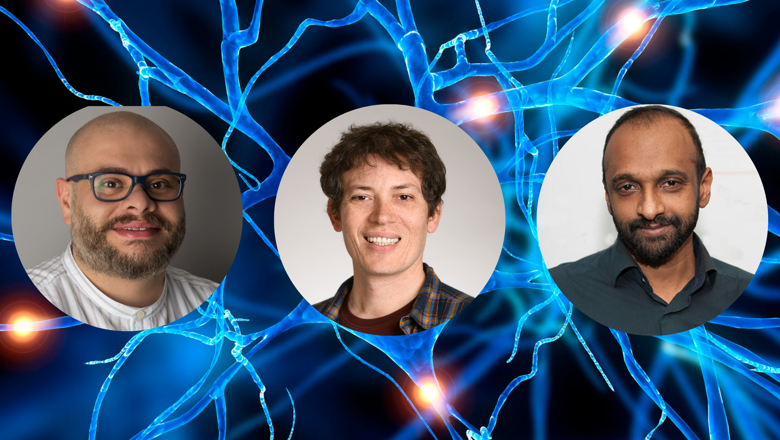
Please see below news items from Sarah Marzi, Verity McClelland, Maria Jimenez-Sanchez, Phillipe Gosset, Deepak Srivastava, Anthony Vernon, Sandrine Thuret, Dr Ahmad Al Khleifat, Professor Alfredo Iacoangeli and Dr Jemeen Sreedharan.
The Sarah Marzi lab welcomes Tiara Schwarze-Taufiq who joined our team as a research assistant in January this year.
The lab has been awarded £1M in funding as part of the UK DRI key questions programme to study the role of oligodendrocytes in Alzheimer’s disease, ageing and resilience: https://www.ukdri.ac.uk/news-and-events/key-questions-programme-backs-ambitious-research-role-support-cells-alzheimers
The lab also received ~£1M as part of the Aligning Science Across Parkinson’s (ASAP) Collaborative Network programme. Together with collaborators in Pittsburgh, we will investigate the mechanisms of environmental toxicants in Parkinson’s disease.
Verity McClelland has had a review article accepted in The Lancet Neurology. Roze E, McClelland VM, Lange LM, Jinnah HA, Vidailhet M, Pisani A. Diagnosis and pathogenesis of dystonia: from developmental roots and shared mechanisms towards precision medicine. Accepted: The Lancet Neurology 2026.
Maria Jimenez-Sanchez lab news
We have recently obtained funding to investigate how proteostasis mechanisms can control prion-like seeding propagation in neurodegeneration
Thanks to funding from an Alzheimer’s Research Pilot Project Grant, “Tau biosensor models to elucidate astrocyte vulnerability to diseases“, we will establish an astrocyte model to monitor tau seeding in iPSC-derived astrocytes. Ultimately, we aim to investigate how astrocytes respond tau isoforms from different tauopathies and to uncover strain-dependent changes in proteostasis mechanisms.
Together with Sarah Mizielinska and Marc-David Ruepp, funding from a MNDA Biomedical Research Project Grant, “Autophagy defects and TDP-43 spreading in ALS: cellular mechanisms and therapeutic opportunities” will allow us to establish iPSC-derived astrocyte and neuron models to study TDP-43 seeding and propagation. We aim to uncover how autophagy dysfunction contributes to cell-specific vulnerability to TDP-43 aggregation and to exploit selective autophagic degradation to prevent TDP-43 spreading.
News from Philippe Gosset Philippe Gosset from Chris Miller’s Lab has been awarded the Pump-Prime Grant 2026 from ARUK Network London for the project titled “Characterization and Restoration of ER–Mitochondria Tethering in a Model of ALS/FTD Mutant iPSCs.

News from Deepak Srivastava and Anthony Vernon
New work from the Srivastava and Vernon labs, led by Dr Adam Pavlinek and published in Cell Reports Methods, describes a scalable system for long-term recording of electrical activity in human neural organoid-derived networks.
The team developed an approach in which 3D cerebral organoids are dissociated into individual cells, pooled to reduce variability, and replated onto microelectrode arrays. This preserves much of the cellular diversity of organoids while allowing researchers to monitor neural network activity over many days in a more reproducible and higher-throughput format.
Using this system, the researchers followed the maturation of human neural networks as they developed from early asynchronous firing to more coordinated activity. The platform provides a valuable tool for studying neurodevelopment, testing drug responses, and comparing the functional effects of genetic variants across multiple parallel cultures.
Further information on this link:-https://www.kcl.ac.uk/news/a-long-term-and-scalable-system-to-record-from-neural-organoids
News from The Sandrine Thuret lab
We had no news in the Winter- and now plenty for Spring! We are delighted to highlight two recent publications in Cell Stem Cell. First, we contributed to “Transcriptional profiles of immature neurons in aged human hippocampus track Alzheimer’s pathology and cognitive resilience.” This study systematically identified immature neurons in the aged human hippocampus and demonstrated that immature neuron programmes are disrupted in Alzheimer’s disease, but relatively preserved in individuals showing cognitive resilience, providing a link between neurogenesis-related processes, ageing, and disease outcomes. Co-authored with Dr Hyunah Lee and Sahand Farmand.
Next, in this perspective, “Adult neurogenesis: New neurons, new opportunities”, the field collectively outline how emerging technologies are transforming the field, shifting the focus toward mechanistic and functional understanding of how new neurons are generated and integrated in the adult brain. Co-authored with Dr Chiara de Lucia.
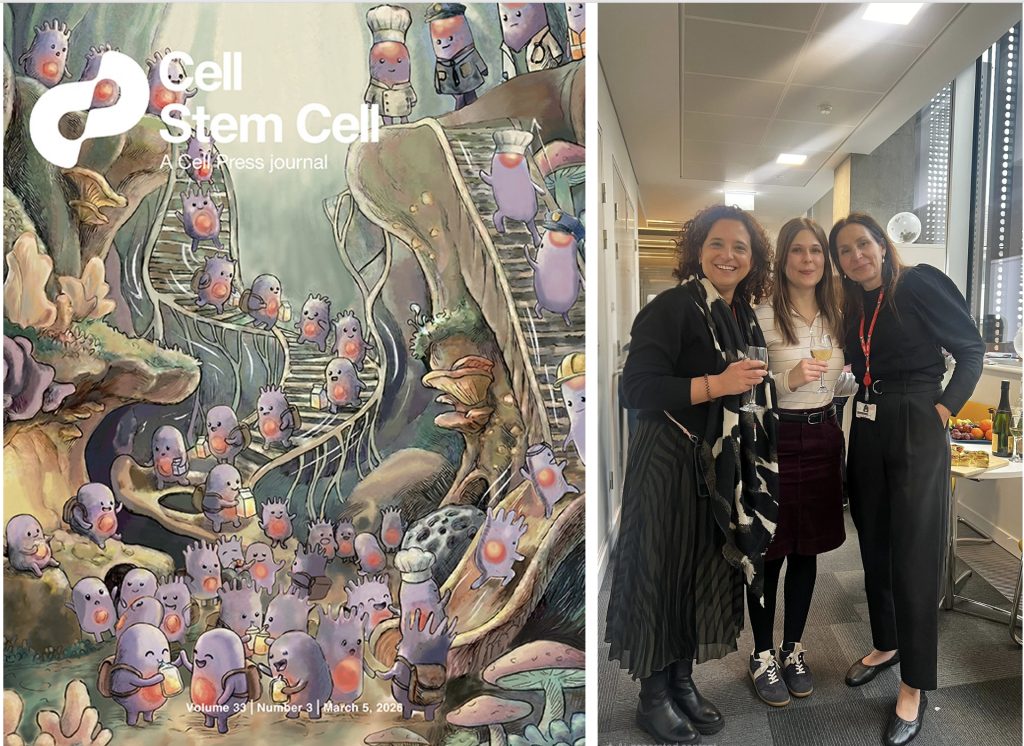
Congratulations to Miryam Ravji, for her first published paper resulting solely from her MSc project -co-supervised by Dr Lucia Batzu and Gargi Mandal– out in Frontiers in Cell and Developmental Biology showing how “High dopamine impairs early neuronal identity and morphology in human hippocampal progenitor cells”.
Huge congratulations also to Dr Vikki Houghton on successfully completing her PhD, “Investigating the Impact of Food Allergy on Children’s Mental Health and Cognition, and the Underlying Neurobiological Mechanisms.” This work provides an important interdisciplinary perspective linking immune function, brain health, and cognition.
We are also thrilled to have been awarded one of the seven Wellcome Trust Target Validation grant, supporting our work to advance and validate novel therapeutic targets for mental health disorders. Beyond the lab, during Brain Awareness Week, Zarah Haniff led a creative outreach initiative, beautifully produced by our school communication manager, Dr Francesca Greenstreet, translating complex neuroscience into a visually engaging format for a wider audience, have a look here! While Dr Lucia Batzu and I discussed exercise and Parkinson’s disease on the Movers &Shakers podcast.
News from Ahmad Al-Khleifat
Dr Al Khleifat has been appointed Adjunct Associate Professor at University of Jordan. We’re thrilled to welcome three new members to the team: Simon Topp as Senior Bioinformatician, Aminah Ali as Bioinformatician, and Young Kim as Epigeneticist. We’re excited to have them on board.
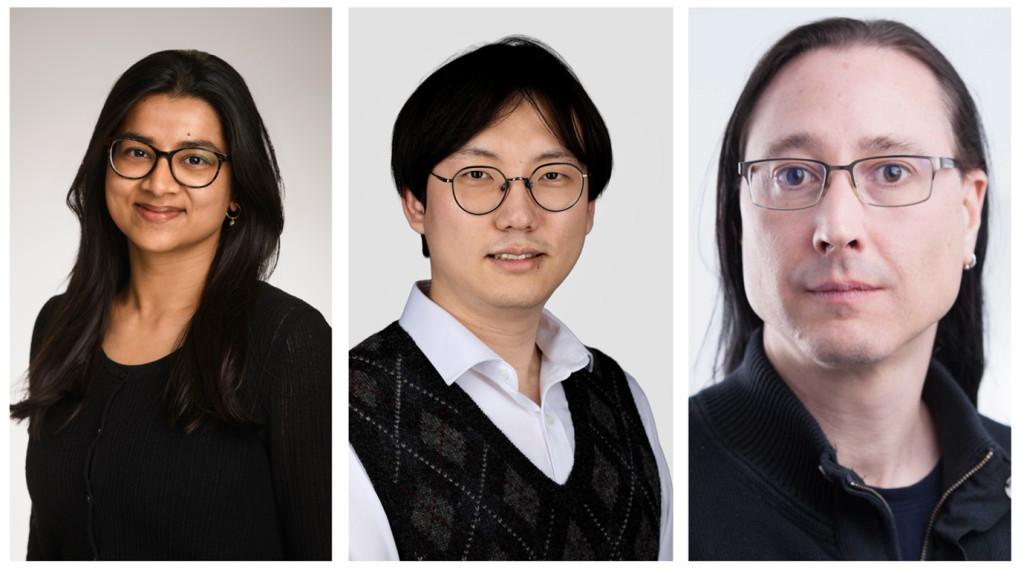
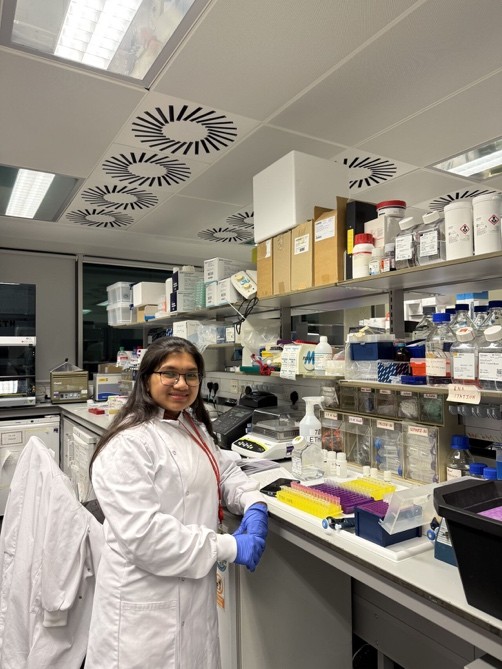
A new paper led by talented PhD student Johanna Vallikivi (below)has been accepted in the journal Brain: “CYP2D6 variants in amyotrophic lateral sclerosis: an association study of risk and survival.”
We have published a new systematic review, “Gut microbiota and ALS: cause, consequence or correlation?”, led by brilliant Research Assistant Triparna Roy (below) in Frontiers in Neuroscience. Read the paper here
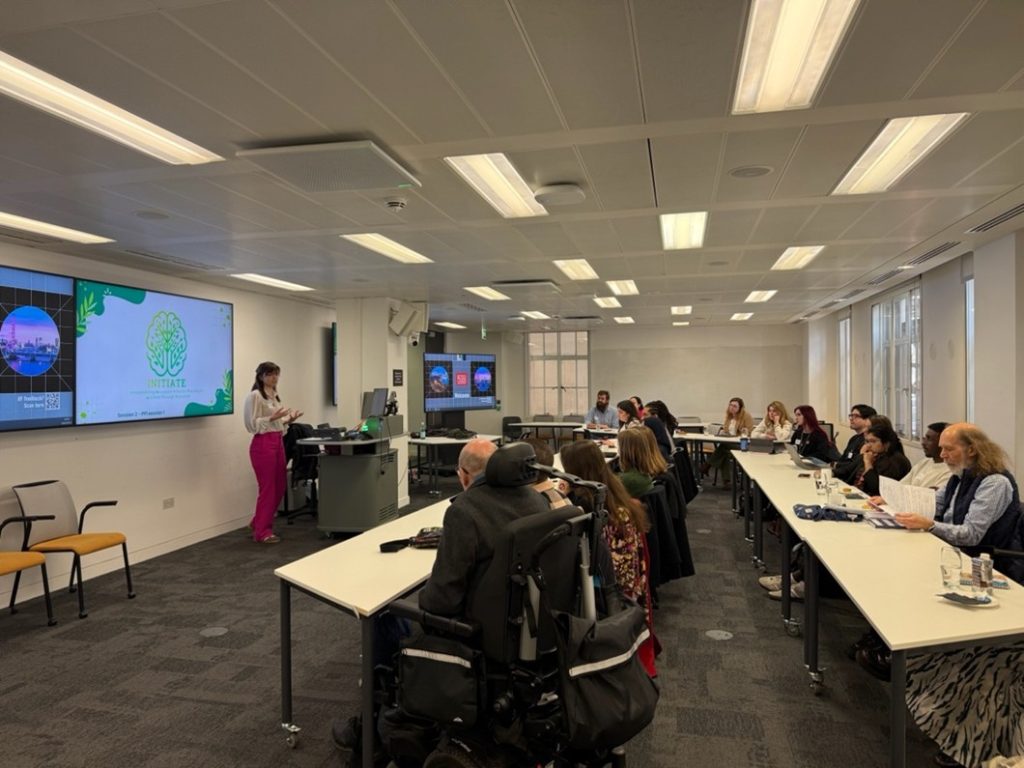
We organised a workshop at King’s College London on best practices for engaging with people living with Motor Neuron Disease and their families. The workshop aims to develop guidance for PhD students and healthcare professionals with limited prior experience working with people affected by MND.
We’re delighted that our team has been selected for the Longitude Prize on ALS (also see news item below) to lead the project “Sex-Specific Target Discovery in ALS: A Data-Driven Precision Medicine Approach.”
The consortium brings together expertise from Project MinE, UK Human Functional Genomics Initiative, United2EndMND, UK MND Research Institute, University of Exeter, UMC Utrecht Brain Center, Oxford PharmaGenesis, UK Dementia Research Institute, Deep Dementia Phenotyping (DEMON) Network, and Ombion Centre for Animal-free Biomedical Translation The consortium includes Deepak P. Srivastava, Afra Aabdien , Jonathan Mill, Jeroen Pasterkamp, Deepak P. Srivastava, David Llewellyn, Kim Wager, Karin Slater, and Alfredo Iacoangeli.
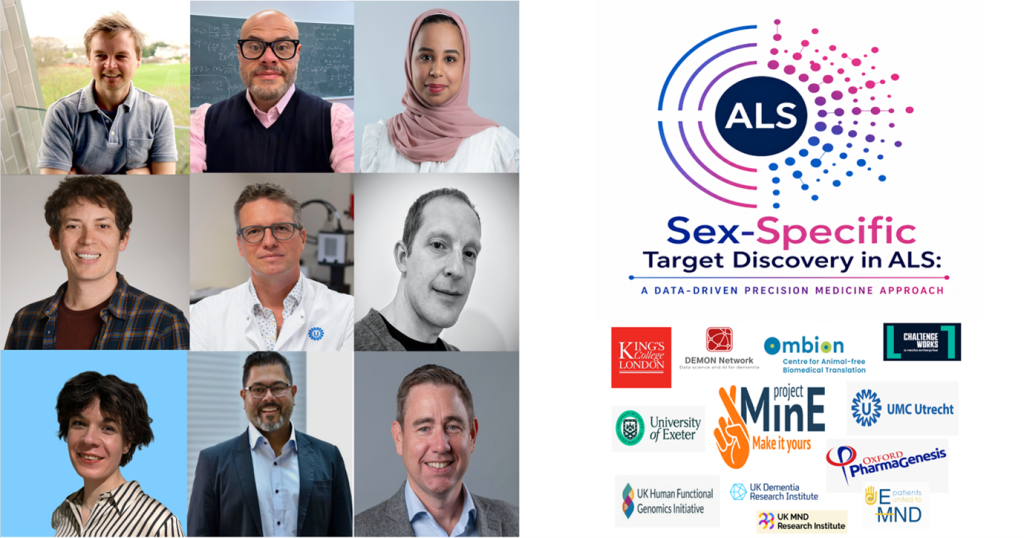
Dr Ahmad Al Khleifat (please also see news item above), Professor Alfredo Iacoangeli and Dr Jemeen Sreedharan from the Department will form part of three teams that have each been awarded a £100,000 Discovery Award as part of the Longitude Prize on ALS.
The Longitude Prize on ALS is a £7.5 million international programme to incentivise the use of AI-based approaches to transform drug discovery for the treatment of amyotrophic lateral sclerosis (ALS). The prize is principally funded by the MND Association and designed and delivered by Challenge Works, home of the Longitude Prize. Additional funders include Nesta, the Alan Davidson Foundation, My Name’5 Doddie Foundation, LifeArc, FightMND, The 10,000 Brains Project, Answer ALS and The Packard Center at Johns Hopkins.